Hebrew is Magic: Tolerate This!

Today’s word is based on the following billboard, currently posted in my hometown of Ra’anana.
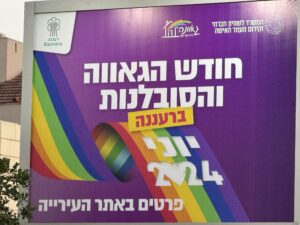
In many countries around the world, including Israel, June is Pride Month. This billboard declares that here in Ra’anana, we celebrate both ge’ava

(“pride”) and sovlanut

“tolerance.”

It’s that second word that we’ll explore further.

While tolerance is often portrayed as “loving everyone for who they are,” Hebrew takes a more pragmatic view, one based on how human beings actually think and behave.

To truly understand the meaning of sovlanut, we must examine the shoresh (root), in this case samech-bet-lamed
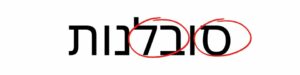
a three-letter word that means “suffering.”

So tolerance, according to Hebrew, involves an element of internal suffering or struggle.

While this view may seem less warm than one that propagates universal love and understanding, it is, in my opinion, more in touch with reality.

Likewise, Hebrew makes clear that just because we may not naturally love or like certain individuals (or even groups), that doesn’t let us off the hook: True tolerance means accepting them anyway, even if doing so causes us discomfort.

In their 1967 hit “Get Together,” the Youngbloods implored humankind to “love one another right now.” While a beautiful idea, Hebrew would likely suggest, “Let’s not get ahead of ourselves.”

Hebrew recognizes that unconditional love for one another is an aspirational goal, but not the starting point. The first step towards a better world begins with treating each other fairly and equitably.

Regardless of how we feel.


Joel Chasnoff is a stand-up comedian, podcast host, and co-author of Israel 201, winner of the 2023 National Jewish Book Award. You can find out more about his comedy, books, and upcoming tour at www.joelchasnoff.com, and sign up for his weekly newsletter, Hebrew Is Magic, to learn more about the hidden life lessons in Hebrew words.  

הציבו לעצמכם.ן מטרה לימודית מקצועית לקיץ הקרוב

חישבו על נושא שמעניין אתכם.ן הקשור בעבודת ההוראה השוטפתפיתוח מיומנות ספציפית בשפה, יצירת קהילה כיתתית לומדת, עידוד עצמאות בלמידה, הערכה, או כל נושא אחר שתרצו לדעת עליו עוד. חפשו חומרי קריאה/צפייה בנושא והקדישו זמן קבוע במהלך הקיץ ללמידה.שתפו את הרכז.ת ומורי.ות עברית נוספים.ותבנושא שבחרתם.ו, בתוכן שלמדתם.ן, ובתובנות והשלכות מעשיות הנובעות מהלמידה במהלך הקיץ או בתחילת השנה הבאה. חפשו במאגר המשאבים לפיתוח מקצועי של עברית במרכז רעיונות לנושא וחומרי לימוד. 

Continue reading

Commemorating and Celebrating Israel’s 76th birthday at Luria Academy of Brooklyn 

Never in the history of the Modern State of Israel have Yom HaZikaron and Yom HaAtzmaut been so fraught as this year. How to commemorate and then celebrate when never have so many civilians lost their lives to terrorism, nor have so many soldiers been lost in the fight against terrorism? Many Hebrew leaders and teachers participated in Hebrew at the Center webinars and online Mifgashim to discuss how to mark these “holidays” this year as “unprecedented Holy Days.” This week’s Member School Highlight describes how the Luria Academy of Brooklyn leaned in to these two days, and specifically, to the twilight of transition from commemoration of remembrance to the celebration of independent statehood. 

We begin at the twilight between the end of Yom HaZikaron and the start of Yom HaAtzmaut. 

Luria Academy’s administration decided to have their middle school Tekes (טקס or “ceremony”) in the evening, enabling working parents to be in attendance. Over 150 members of the Brooklyn community came to participate. This is no small matter for the Luria community, a progressive Jewish day school in a progressive neighborhood in Brooklyn, whose focus has long been on seeking peace, and whose families by and large are strong supporters of equal rights for all. Like all Jewish communities, the events of October 7th, 2023 and its aftermath, have shaken this community to the core, but for this community in particular, shards of hope for peace needed to be at the forefront of any communal commemoration and celebration. 

Preparations for the post Pesach ימים קדושים began far in advance.  

An arts educator, Ellen Alt, was brought in to do a professional development program for the full faculty, on how to release their feelings about the tragic day of October 7th through creating a work of art. This was a powerful experience for the Luria educators which included viewing works of art created by Israeli artists. It also prepared the 6th through 8th grade teachers to replicate and facilitate a similar visual art experience for their students. 

At the Tekes, the resulting student art was on display in the school’s Beit Midrash and guests did a gallery walk to take in the work by the Luria Middle School artists.  

Between readings, each grade sang a song that they had learned for the Tekes, from a new repertoire of Hebrew music that has recently been composed, turning prose and poetry left behind by soldiers who have fallen in Israel’s wars. This collection is called עוד מעט נהפוך לשיר, or in English “Soon we will turn into a Song.” Various well-known Israeli musicians were each given a piece of writing left behind in letters and journals of different fallen soldiers to turn into a song. This includes Idan Reichel’s אמא, אבא, וכל השאר. (“Mommy, Daddy, and all the rest”). In preparing for the ceremony, each class learned the key vocabulary of their song as well as the overall spirit or meaning of the lyrics. Though all the words were written by fallen soldiers during their active duty in Israel’s military, all were “hope oriented” for a peaceful resolution to the decades-long conflict between Israel and the Palestinians. Though the musically enriched ceremony lasted 90 minutes, all remained riveted. 

Following the Tekes, the transition from remembrance to celebration took the form of Israeli food and music. 

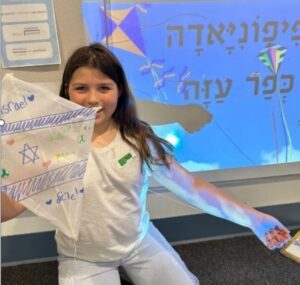
The day of Yom HaAtzmaut at Luria Academy of Brooklyn was similar to past years, with fun stations highlighting the best of Israel. One activity was added this year, specifically linked to the events of October 7th. Fourth through Eighth grade students took a part in an initiative organized by The Jewish Agency For Israel (JAFI) in honor of the עפיפוניאדה, a Kite Festival held every October in Kfar Aza, Israel for the past four decades. The purpose of the annual Kite Festival is to promote peaceful connections between the south of Israel עוטף עזה and the Gaza strip. Ironically, this year’s event, scheduled for October 7, 2023, did not take place. Instead, on that very day, members of the Kotz family, the organizers of the Kite Festival and residents of Kfar Aza, were killed in their home.  

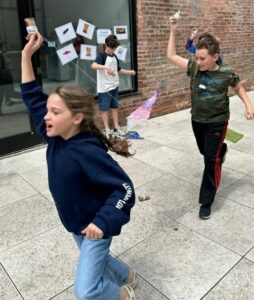
In its reconstituted format, now known as “Kites for Freedom,” the kites represent the Bring them Home Now movement. Each student decorated their hand-made kite with a message of Peace and Hope that they composed in Hebrew and in English. Sadly, it was not deemed safe to run through Prospect Park with Hebrew inscribed kites. Yet while running and flying their own hand-created kites along the Brooklyn streets surrounding their school, the children of Luria Academy processed and released at least some of the tension that has been a constant presence since that black day in October. 

Hebrew is Magic: We All See the Light

As you can imagine, there’s a lot of talk in Israel right now about the plight of the hostages.

The major question on everyone’s mind: Is there any chance we’ll get them out alive?

However, an equally important question lies beneath this: If and when the hostages do come home, what will their lives be like?

Having endured the horrors of Gaza, can they return to anything resembling normalcy?

After so much time in literal and metaphorical darkness, is there hope for them to transition back into the light?

As I’m sure you agree, we have no choice but to believe: we must have unwavering hope that our brothers and sisters will return home alive and that a fulfilling life awaits them.

But it’s not just you and I who need to think this way. Indeed, Hebrew, in its infinite wisdom and capacity for optimism, is hopeful too.


The Hebrew word for freedom is chofesh.

But when it comes to the setting free of hostages, captives, or anyone who’s gone through a traumatic experience, Hebrew uses a different word: l’shachrer

Look closely. Do you see another word embedded inside, one you may recognize?

Lo and behold, right there in the middle of l’shachrer is shachar

Hebrew for “dawn” – that beautiful part of the day when the darkness is almost (but not quite) behind us and the light grows ever stronger.

To me, the message conveyed by Hebrew couldn’t be more hopeful, or more clear: To set a person free is to usher them into the dawn. In doing so, they are granted a new beginning, a fresh start.

In this sense, l’shachrer is more than just a verb, it’s an invitation to transition from the darkness they have known into the light that awaits them.

This is our fervent hope, and our heartfelt prayer: that they may all emerge from darkness into the brilliant freedom of a new day.


Joel Chasnoff is a stand-up comedian, podcast host, and co-author of Israel 201, winner of the 2023 National Jewish Book Award. You can find out more about his comedy, books, and upcoming tour at www.joelchasnoff.com, and sign up for his weekly newsletter, Hebrew Is Magic, to learn more about the hidden life lessons in Hebrew words.  
השתמשו ב’שאלה הגדולה’ של יחידת הלימוד להוביל את הלמידה במהלך היחידה – מתחילתה ועד סופה

השתמשו ב’שאלה הגדולה‘ (או כמהשאלות גדולות‘) של יחידת הלימוד בפתיחת היחידהלעורר סקרנות ומוטיבציה אצל התלמידים.ות, במהלך היחידהלעצב ולכוון את הלמידה תוך הפעלת יכולות חשיבה גבוהות ואישוש הנחות, ובסוף היחידהכחלק מהרפלקציה על הלמידה. אם בחומר הלימוד לא מצויינת ה’שאלה הגדולה‘, אתרו שאלה כזו בעצמכם.ן, לפי תכני היחידה (למשל, מיהו חבר טוב? איך אמנות משקפת ומעצבת את האנשים והחברה? איך סדר היום שלנו מראה מי אנחנו? וכו‘). העזרו במסמך הזה (מאת מחלקת החינוך של אוהיו) לאיתור שאלות גדולות נוספות לפי רמות מיומנות לפי נושאים. 

Continue reading

Super-Cool SHINSHINIM: Magic Potion for Enthusiastic Middle School Hebrew Studies at The Brandeis School of San Francisco

At The Brandeis School of San Francisco Students have the choice to continue their Hebrew language studies or switch to Spanish when they enter 6th grade.  

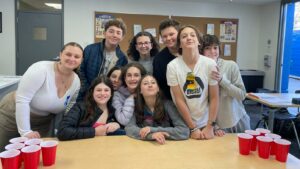
The numbers of self-selected Hebrew students remain strong, thanks to the influence of smaller groups and accelerated progress of those who decide to continue learning Hebrew. However, developing close relationships with the Shinshinim is a major motivating factor for continuing to study Hebrew in Middle School. 

Shinshinim are 18-year-old Israeli emissaries that come to communities in America to spread knowledge and love for Israel. According to Debby Arzt-Mor, Director of Jewish Learning at The Brandeis School, the Shinshinim bring Ruach, lots of games, up-to-date Israeli music, and enthusiasm for both Israel and for Hebrew language. The selection process in Israeli high schools to become a Shinshin is highly competitive, and is cannot be overstated that Israel’s best and brightest high school graduates are taking a gap year before beginning their army service to serve in Jewish communities. Inspiring Shinshinim increase motivation as they bring Modern Hebrew language to life, throughout the K-8 school, “making Hebrew cool.”   

Over the past few years, a strategic decision was implemented to focus a major part of Brandeis’ Shininims’ time to support the work of the 5th, 6th, 7th. and 8th grade Hebrew classes. This has resulted in greater interest among 5th graders to continue their formal study of Hebrew when they move into 6th grade.   

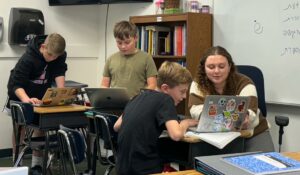
Shinshinim are not trained teachers, however they prepare and run a wide range of Israel and holiday related programs. They function as “intern teachers” and interact with students during formal and informal learning times, such as assemblies, arrivals, recess, and aftercare. The Shinshinim that work at the Brandeis School are highly motivated to “teach” Hebrew throughout the school, as they see and feel how their leadership impacts student motivation. 

This year The Brandeis School has had one full-time and one part-time Shinshinit, Lia and Avya. Both Shinshiniyot work with 4 Hebrew teachers as well as with Debby, infusing the spirit of Israel throughout the school. The Middle School Hebrew teachers work with the shiniyot an average of 3 times a week, in the different classes and most teachers spend some of their prep time mentoring the Shinshinim, working with them on their ideas, and helping them adapt their ideas to a language class environment. By way of example: the Shinishinim don’t just get to teach a new, trendy Israeli song. They learn to give context, teach vocabulary, and help students integrate the new vocabulary into their own receptive and productive language skills.   

When this academic year ends and Lia and Avia return to Israel to begin their army service, they will be able to apply their new skills to their service. No doubt they will employ some recently acquired teaching skills from their year as a Shinshiniyot at The Brandeis School of San Francisco. 

For more information on effective utilization of Shinshinim in Hebrew ool classrooms, contact Debby Arzt-Mor at darzt-mor@sfbrandeis.org. Click HERE or more information on bringing Shinshinim to your school and community. 

Hebrew is Magic: Full Speed Ahead

Dear friends,

This week we celebrated Israel’s 76th birthday.

What was once a vision and a distant dream has since become our tangible homeland. In the Zionist spirit, we’re going to unpack one of the words in the first stanza of “Hatikvah,” Israel’s national anthem.

As you’ll recall, the fourth line of “Hatikvah” reads:

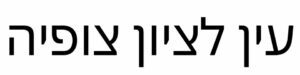
“The eye looks to Zion”

That final word, tzofiyah (צופיה)

means “to look” or “to scout.” It’s derived from the shoresh (root) tzadi-peh-yud (.צ.פ.י)

Other words derived from this root include the youth movement Tzofim (צופים)

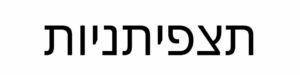
or “Scouts, Tatzpitanit (תצפיתנית)

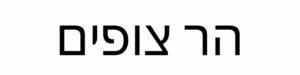
the battalion of female soldiers in the IDF who monitor Israel’s borders 24-7, commonly nicknamed, “Eyes of the country,” and the Jerusalem hilltop where many of you studied (and partied) during your semesters abroad at Hebrew-U, Har Tzofim (הר צופים)

AKA, Mount Scopus.

But what’s really special about the tzadi-peh-yud root is that it appears in tzipiyah (ציפייה)

Hebrew for “expectation,” which brings us back to Israel’s national anthem.

Hebrew knows something we often overlook: The first step in making dreams come true is to expect them to come true!

When we visualize our goals, we inherently anticipate them into being. Keeping our eyes on the prize is the equivalent of a self-fulfilling prophecy – when it comes to Israel, this holds true as ever. For centuries, the Jewish people maintained an unwavering belief that we would one day return to our homeland; our practice was centered not around if it would happen, but when.

As Theodor Herzl famously said, “If you will it, it is not a dream” – and finally, on that beautiful day in 1948, our expectation became reality.

What’s truly beautiful about the idea of expectation is that it’s a two-way street. While the events of October 7th will be forever seared in our memories, we cannot forget what transpired on October 8th and the days after, when 200,000 Israelis were called for military reserve duty and 350,000 showed up. Meanwhile, Israeli society was overcome with a wave of volunteerism, the likes of which few countries have ever seen.

Why? Because in those harrowing times, Israelis knew what was expected of them, as a nation and as individuals.

As we approach Israel’s 77th year, I invite you to think about your own expectations for Israel and act as though they’ve already been fulfilled.

You might also think about what Israel, in this perilous time, expects of you.

Although this may seem counterintuitive, this mindset is precisely what will turn our expectations into reality.


Joel Chasnoff is a stand-up comedian, podcast host, and co-author of Israel 201, winner of the 2023 National Jewish Book Award. You can find out more about his comedy, books, and upcoming tour at www.joelchasnoff.com, and sign up for his weekly newsletter, Hebrew Is Magic, to learn more about the hidden life lessons in Hebrew words.  

תכננו פעילויות בעברית לפיתוח יכולות חשיבה מסדר גבוה אצל כל התלמידים.ות

פיתוח יכולות חשיבה מסדר גבוה ופתרון בעיות היא חלק ממיומנויות המאה ה-21 הנדרשות מהתלמידים.ות שלנו כאזרחים.ות עתידיים.ות בעולם הגדול. השתמשו בטקסונומיה של בלום (החדשה) ויישומה בהוראת שפות נוספות על מנת לשאול שאלות ולתכנן פעילויות בעברית אשר דורשות הפעלת חשיבה מסדר גבוה. הקפידו לעודד חשיבה מסדר גבוה אצל כל התלמידים.ות בכל רמות העברית. לרשימת הפעלים להגדרת הפעילויות ולפעילויות לדוגמה בכל רמת חשיבה, לחצו כאן (מאת מחלקת החינוך של אוהיו). 

Continue reading

Hebrew is Magic: The Whole in Peaces

Last week, we concluded our Passover Seders as we always do, with the familiar phrase “Next year in Jerusalem.”

This expression has always struck me as peculiar, considering that Jerusalem is already under our control (and has been for nearly 76 years).

However, this year the contradiction feels even more poignant. With hostages still in Gaza, Israel at war with Hamas, and the IDF gearing up for a potential confrontation with Hezbollah in Lebanon, is it really Jerusalem that we’re longing for in the year to come?

Yet, when we delve into the Hebrew meaning of this remarkable city’s name – Yerushalayim – we find that this aspiration isn’t so peculiar after all.


Yerushalayim

is actually a combination of two words: yeru

an ancient Hebrew term for “city,” and shalayim

derived from the root shen-lamed-mem

which forms the basis for two familiar words: shalom

(“peace”) and shalem

which means “whole.”

This brings us back to “Next year in Jerusalem.” What we’re truly praying for at the end of our Seders (and our most recent ones especially) is a year of wholeness – one in which all living hostages are returned to their families, and those who are deceased are given proper burials here in Israel.

And, we long for a year of peace, whatever current war zone we happen to find ourselves in, be it the Gaza border, Israel’s northernmost city of Kiryat Shmoneh, or a college campus on New York’s Upper West Side.


Joel Chasnoff is a stand-up comedian, podcast host, and co-author of Israel 201, winner of the 2023 National Jewish Book Award. You can find out more about his comedy, books, and upcoming tour at www.joelchasnoff.com, and sign up for his weekly newsletter, Hebrew Is Magic, to learn more about the hidden life lessons in Hebrew words.  

השתמשו בעזרים ויזואליים כדי לקדם הבנה ולמידה בשיעור עברית

הקפידו להשתמש בעזרים ויזואליים בשיעורטבלה, תרשים, גרף, תמונה, סרטון, קריקטורה, פוסטר, מצגת, וכיוב‘. עזרים אלו ישמשו לא רק לגיוון בהוראה לטובת תלמידים.ות עם צרכי למידה שונים, אלא גם יתמכו בזכירת אוצר מילים, העלאת מוטבציה ומעורבות בלמידה, הפשטת מושגים מורכבים ועיבודם, וחשיפה לתרבות היעד אצל כלל התלמידים.ות. לשיתוף התלמידים.ות בתהליך הלמידה, בקשו מהם.ן להכין/למצוא עזרים ויזואליים לשיעור, אם מתאים. 

לאוסף דוגמות של עזרים ויזואליים מאת אוניברסיטת פיטסבורג לחצו כאן. 

לרעיונות ושימושים בכיתה קראו בבלוג של fluentu כאן. 

Continue reading